
← Back to Blog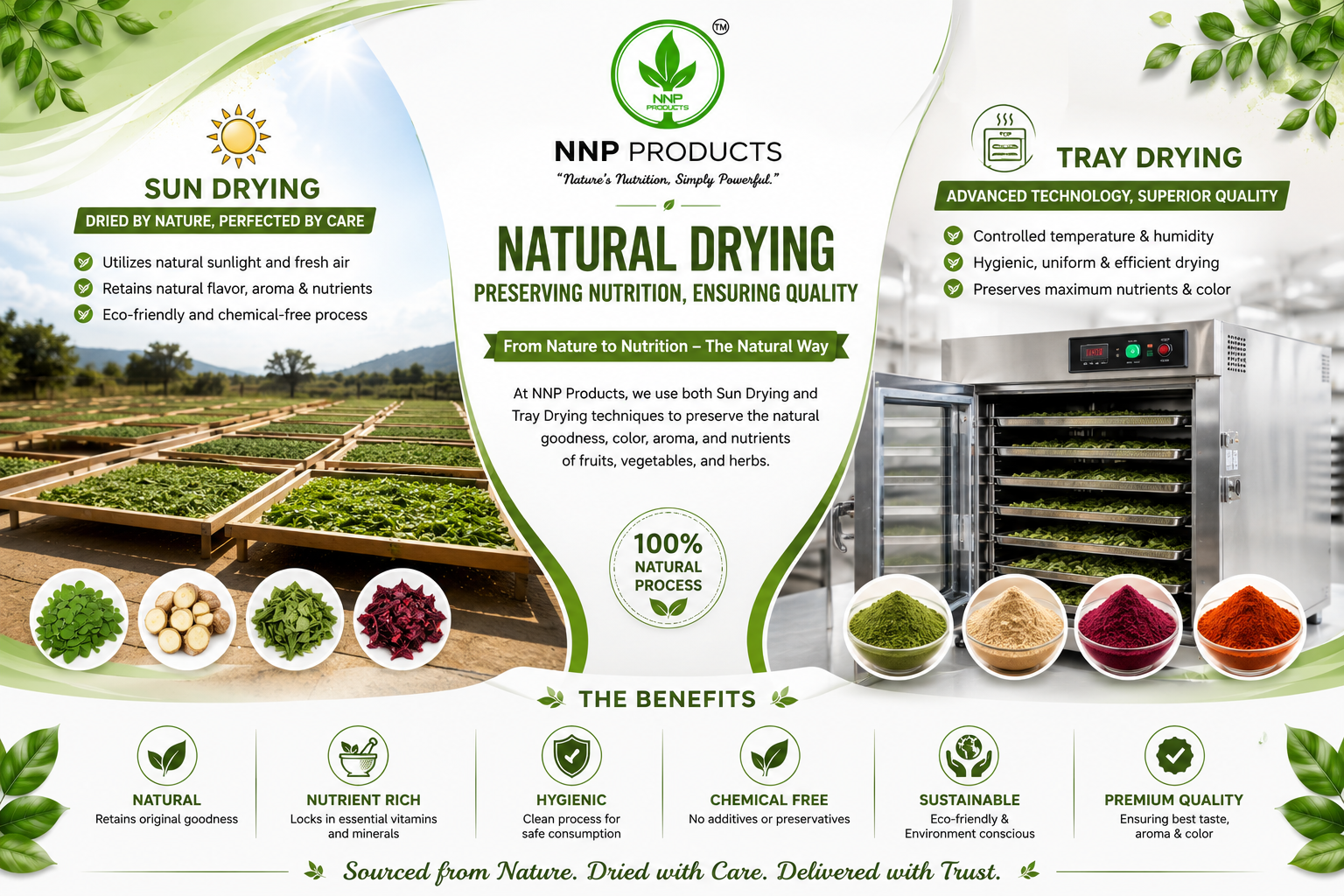
Manufacturing
Sun Drying vs. Tray Drying Dehydration Techniques
June 26, 2026
Dehydration is one of the oldest and most effective methods of preserving agricultural produce. However, the exact technique used dramatically impacts the nutritional profile, hygiene, and shelf life of the final powder. At NNP Products, we emphasize utilizing the right technology to ensure premium quality.
Traditional Sun Drying Technique
Sun drying is a centuries-old practice that relies entirely on natural solar radiation and ambient air flow to remove moisture from harvested produce.
Advantages of Sun Drying
- Cost-Effective: Requires minimal infrastructure and zero electrical energy, making it highly economical.
- Eco-Friendly: A completely natural process with zero carbon footprint.
- Large Scale Feasibility: Suitable for processing massive bulk quantities across open fields.
Disadvantages of Sun Drying
- Weather Dependency: The process is entirely at the mercy of unpredictable weather conditions, rainfall, and humidity.
- Nutrient Loss: Uncontrolled, prolonged exposure to harsh UV rays degrades heat-sensitive vitamins (like Vitamin C) and antioxidants.
- Contamination Risks: Open-air exposure makes the produce highly susceptible to dust, insects, and airborne pathogens.
Modern Tray Drying Dehydration
Tray drying (or cabinet dehydration) is a highly controlled, mechanized process where fresh produce is sliced and placed on perforated trays within an enclosed chamber. Hot air is continuously circulated at precise temperatures to extract moisture efficiently.
Why Tray Drying is Superior for Premium Powders
- Precision Control: Temperature, airflow, and humidity are strictly monitored, allowing for optimized drying curves tailored to specific vegetables and fruits.
- Maximum Nutrient Retention: By drying at lower, controlled temperatures without UV exposure, delicate biochemical structures and vitamins are preserved intact.
- Absolute Hygiene: The sealed environment completely eliminates the risk of external contamination, ensuring food-grade safety and purity.
- Consistent Quality & Color: Rapid, uniform drying prevents enzymatic browning, resulting in powders that retain the vibrant natural colors and robust flavors of fresh produce.